A brief history of Mother Ludlam’s Cave
From the Ludwell spring that watered Waverley Abbey, through the legend of the white witch and her cauldron, to the grotto years and the roof fall of the early 1960s.
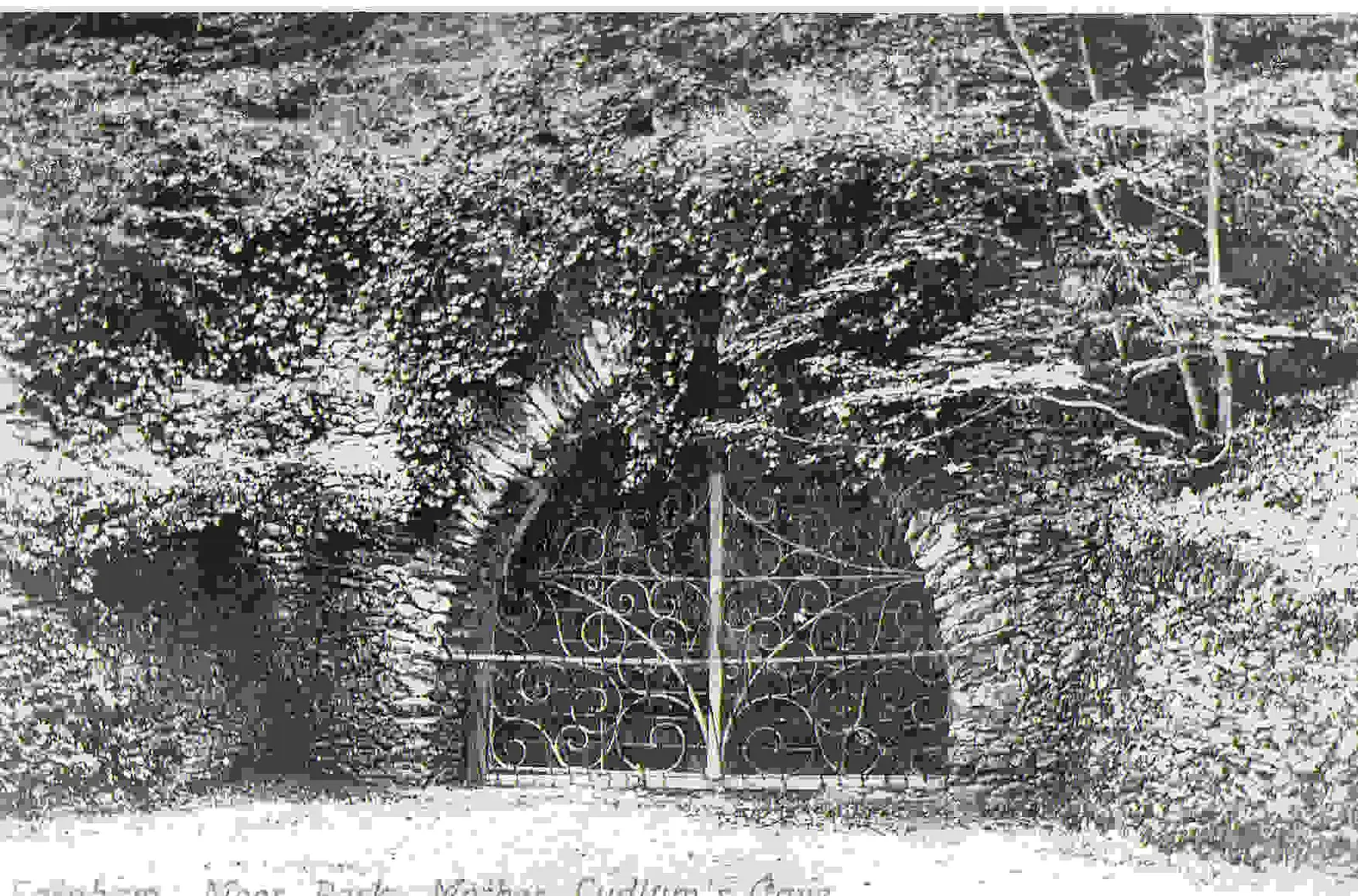
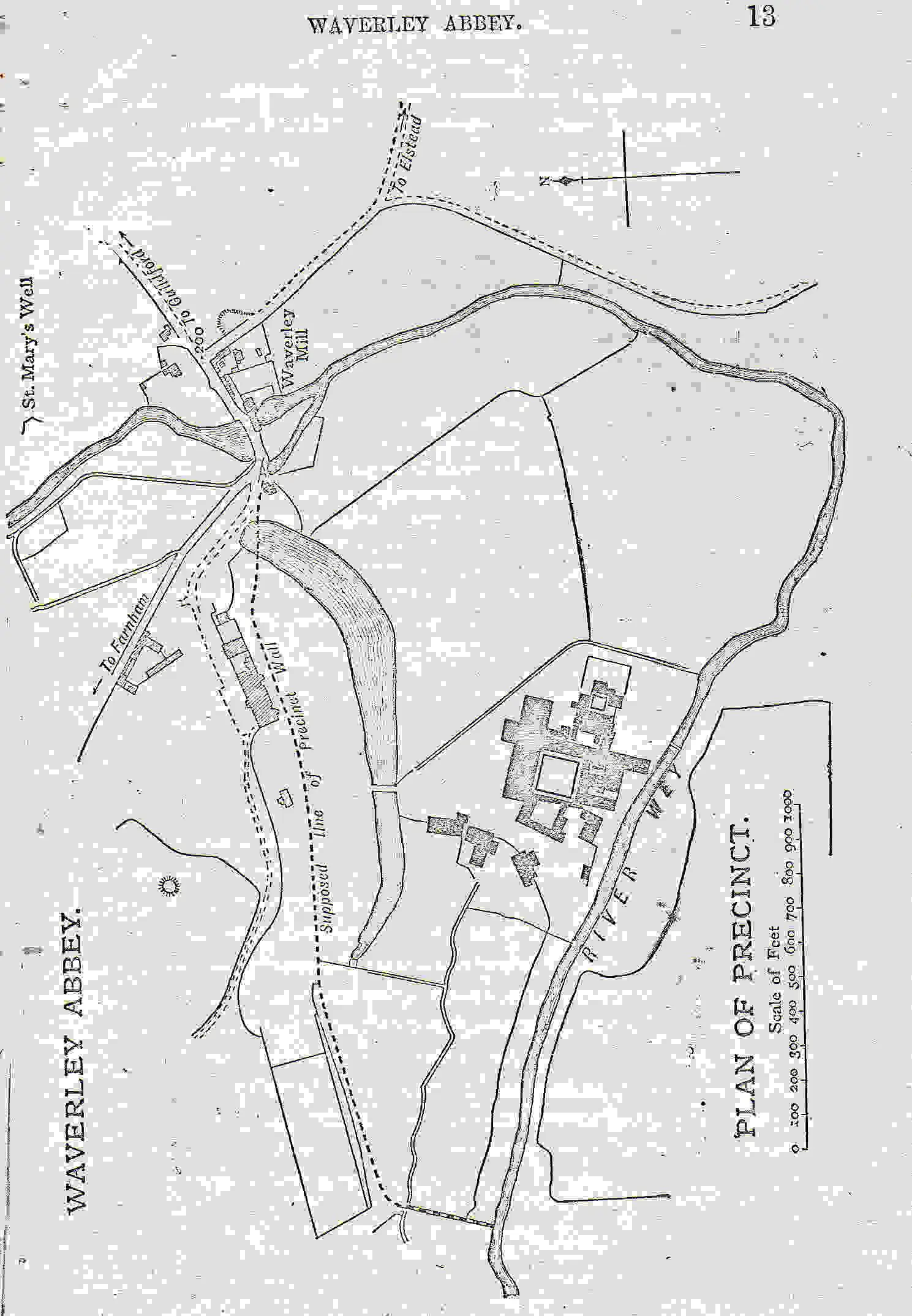
Mother Ludlam’s Cave sits in Moor Park beside the River Wey, a sandstone grotto shaped by springs and careful hands. Medieval water works in the valley supplied nearby religious houses: the spring here had fed Waverley Abbey’s aqueduct since around 1179, and the Annals of Waverley record that in 1216, when it ran dry, Brother Simon channelled several springs into one, creating what the Cistercian monks named St Mary’s Well. Later owners framed the opening as a place to pause, with paving, seats, a basin and a channel for the flow.
By the nineteenth century the grounds were valued for fresh air and water, the entrance gained a protective arch and locked gates, and visitors recorded both improvement and decline as fashions changed.
The name Mother Ludlam belongs to local legend. She is remembered as a white witch who lent household things on trust, most notably a great kettle, and who withdrew her favour when a promise was broken. Versions speak of a chase across the hills and a treasured pot kept safe. The story clings to the sandstone and the river light, giving history a human voice.
Myths & legends
The cave is a small sandstone hollow in the Wey Valley at Moor Park near Farnham, with a spring historically recorded as Ludwell or Ludewell. Etymologies point either to a Celtic root meaning “bubbling spring” or to Old English hlūd well, while modern folklore links the name to the figure Lud.
Celtic layers and sacred spring claims
Many repeat a local claim that the spring site was sacred to the Atrebates, and ties Ludwell to Lud, a Celtic god-king associated with healing, London, and the Trinovantes. Treat this as a folkloric overlay rather than established archaeology, but it remains a persistent strand in retellings.
Mother Ludlam is remembered as a benevolent “white witch” who lent household items on trust, especially a great cauldron, with a strict two-day rule for returns. Earlier versions sometimes lean toward fairy agency rather than a witch, which is why the legend reads differently across periods.
The broken promise and the cauldron
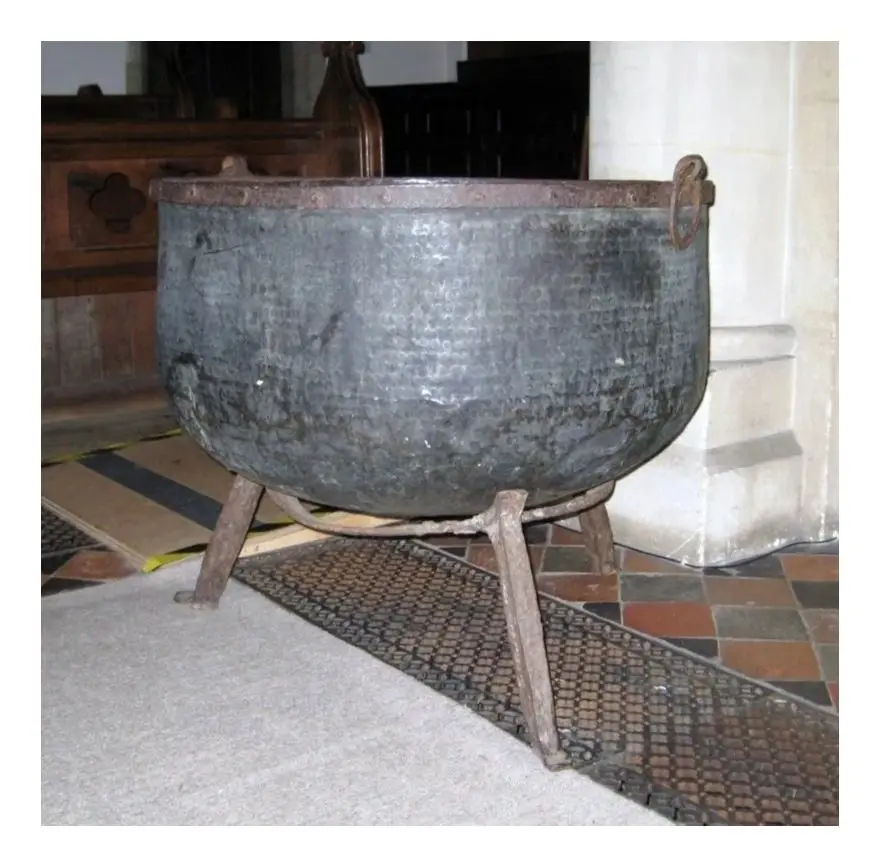
A borrower failed to return the cauldron on time, ending the lending custom. The vessel is now associated with Frensham Church, where a large medieval copper cauldron survives. Historians note such cauldrons had practical parish uses, which explains its presence even if legend gave it a story.
The Devil’s Jumps variant
In one popular version, the Devil stole the cauldron, fled in great bounds that formed the sandstone hills called the Devil’s Jumps near Churt, dropped the “kettle” on Kettlebury Hill, and Mother Ludlam recovered it for safekeeping at Frensham.
The fairy variant on the ridge
A twentieth-century telling places fairies on the highest Jump, with the borrower whispering through a rock hole to obtain the cauldron. When the rule was broken the cauldron hounded the borrower until he reached church sanctuary, where he died and the vessel remained.
“It is really quite astonishing and utterly unaccountable what this week has done for me.”
“It is not the enchanting place that I knew … the basins … are gone … the pavement all broken to pieces.”
The source archive
Mentions of the cave gathered from books, research papers and newspapers across the centuries, collected over the years and continually added to.
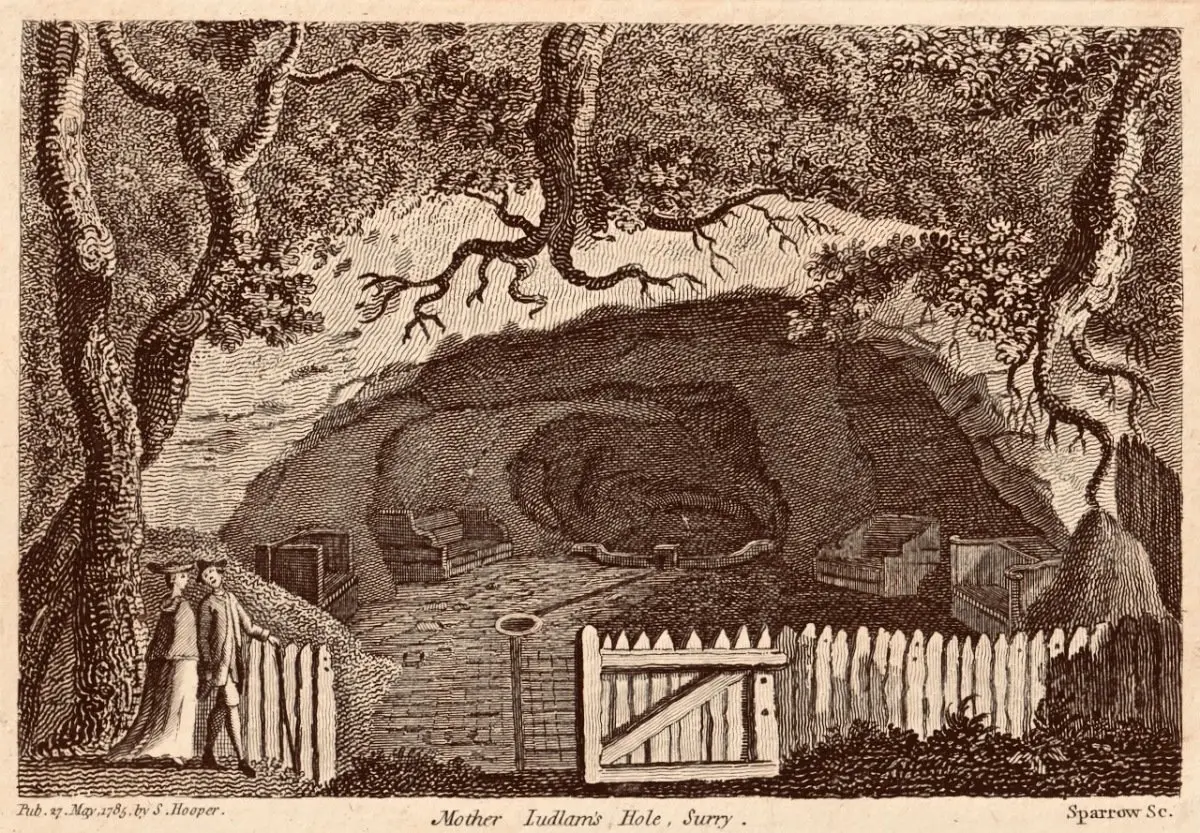
1785
“Mother Ludlam’s Hole, Surry”, engraving published by S. Hooper, 27 May 1785.
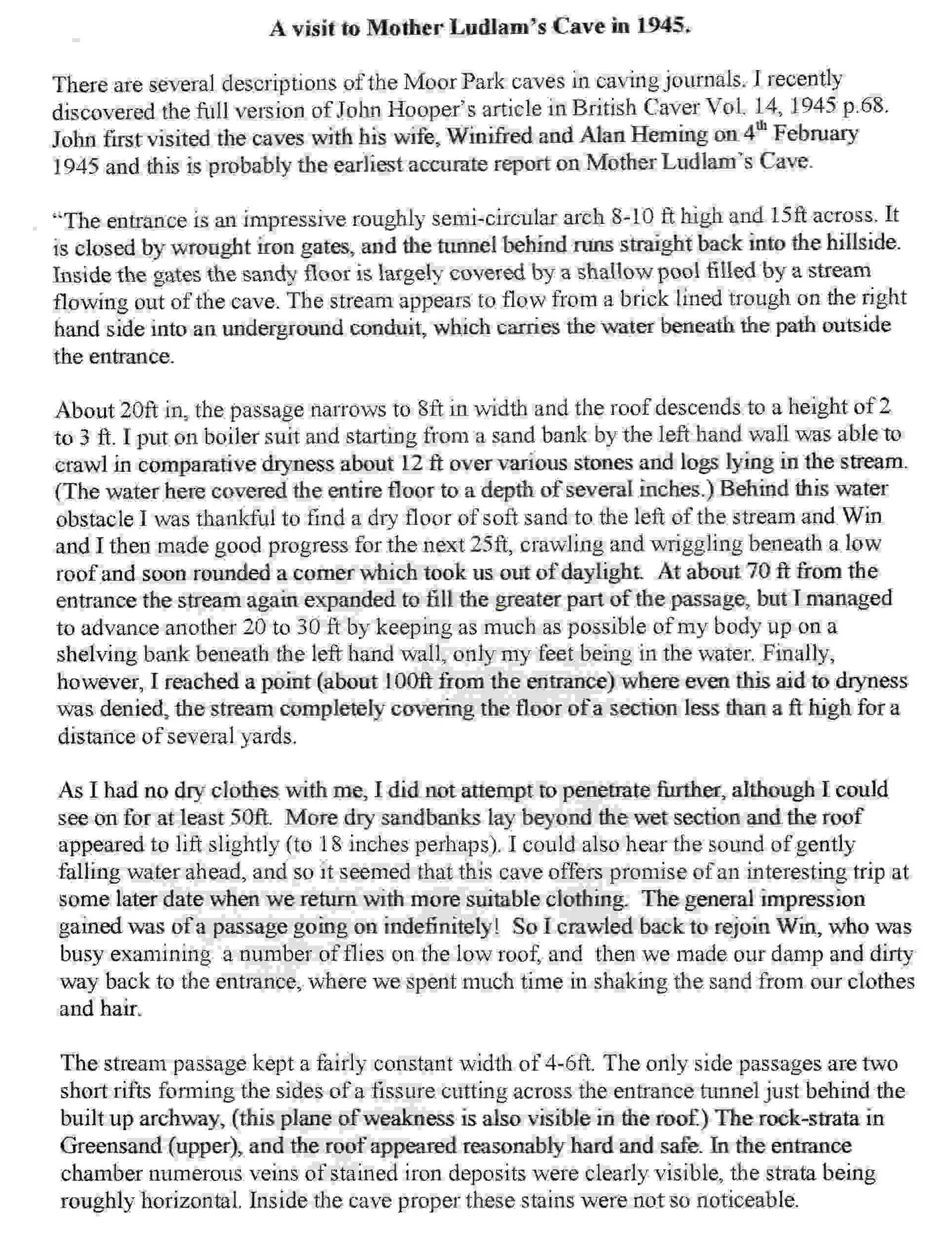
18th century
An antiquarian account of the grotto, from the volume accompanying Hooper’s engraving.
18th century
The account continued: the seats, basin and channel described in their prime.
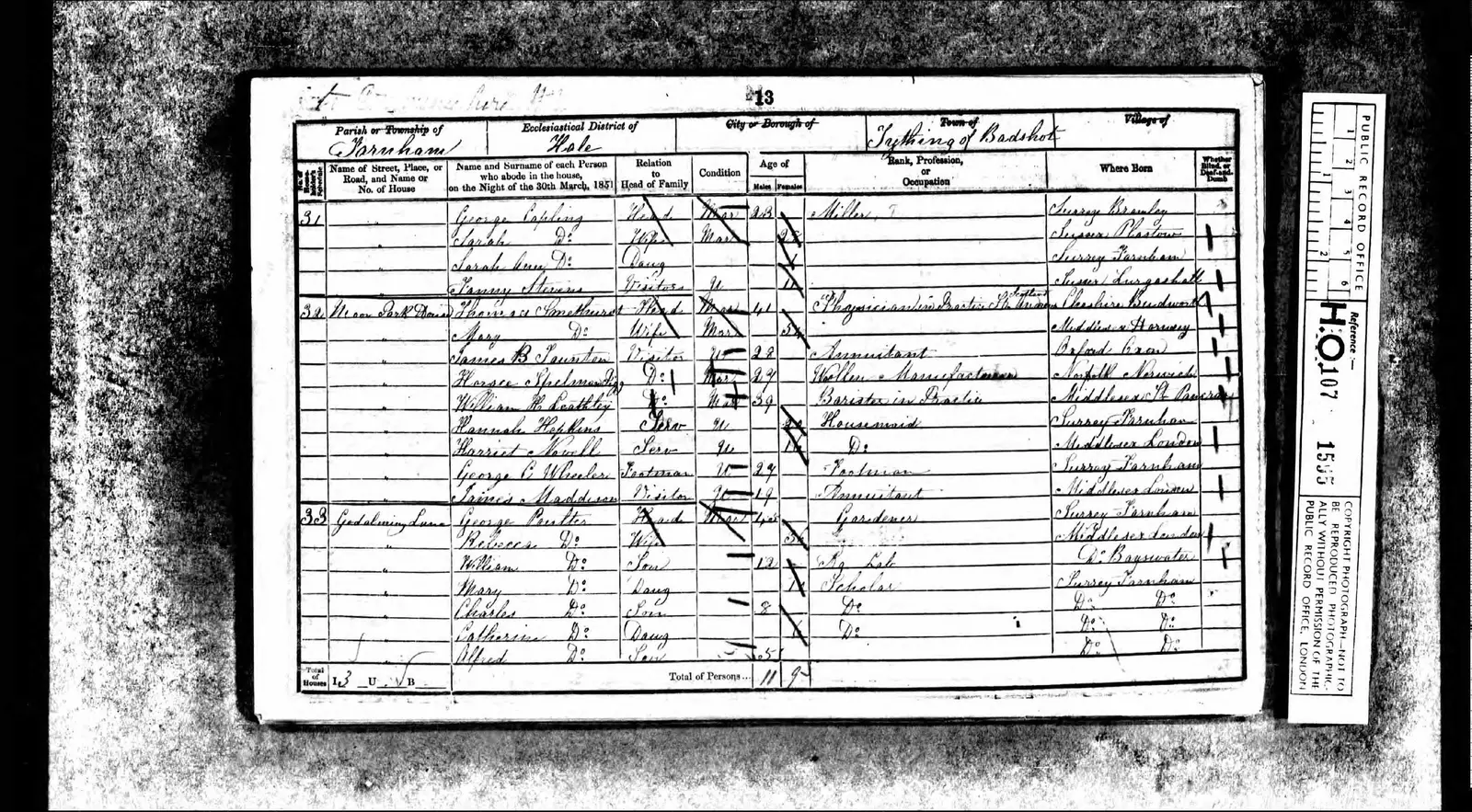
1851
The census records residents at Moor Park: the valley as a lived-in, working landscape.
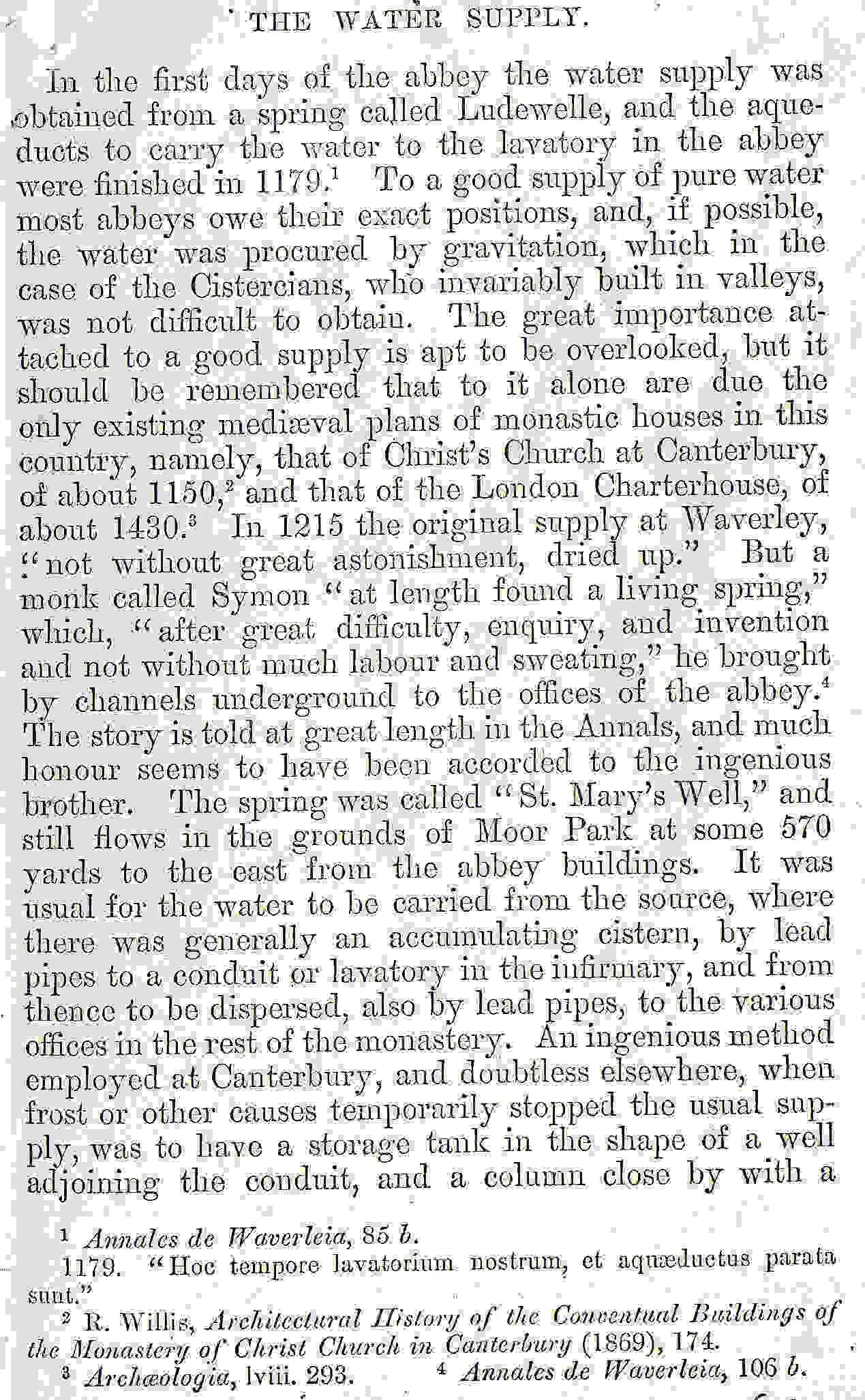
Water supply
Notes on the medieval water works: the spring that supplied Waverley Abbey's aqueduct, recorded in 1216.
Book extract
The cave and its legend, as retold in a county history.
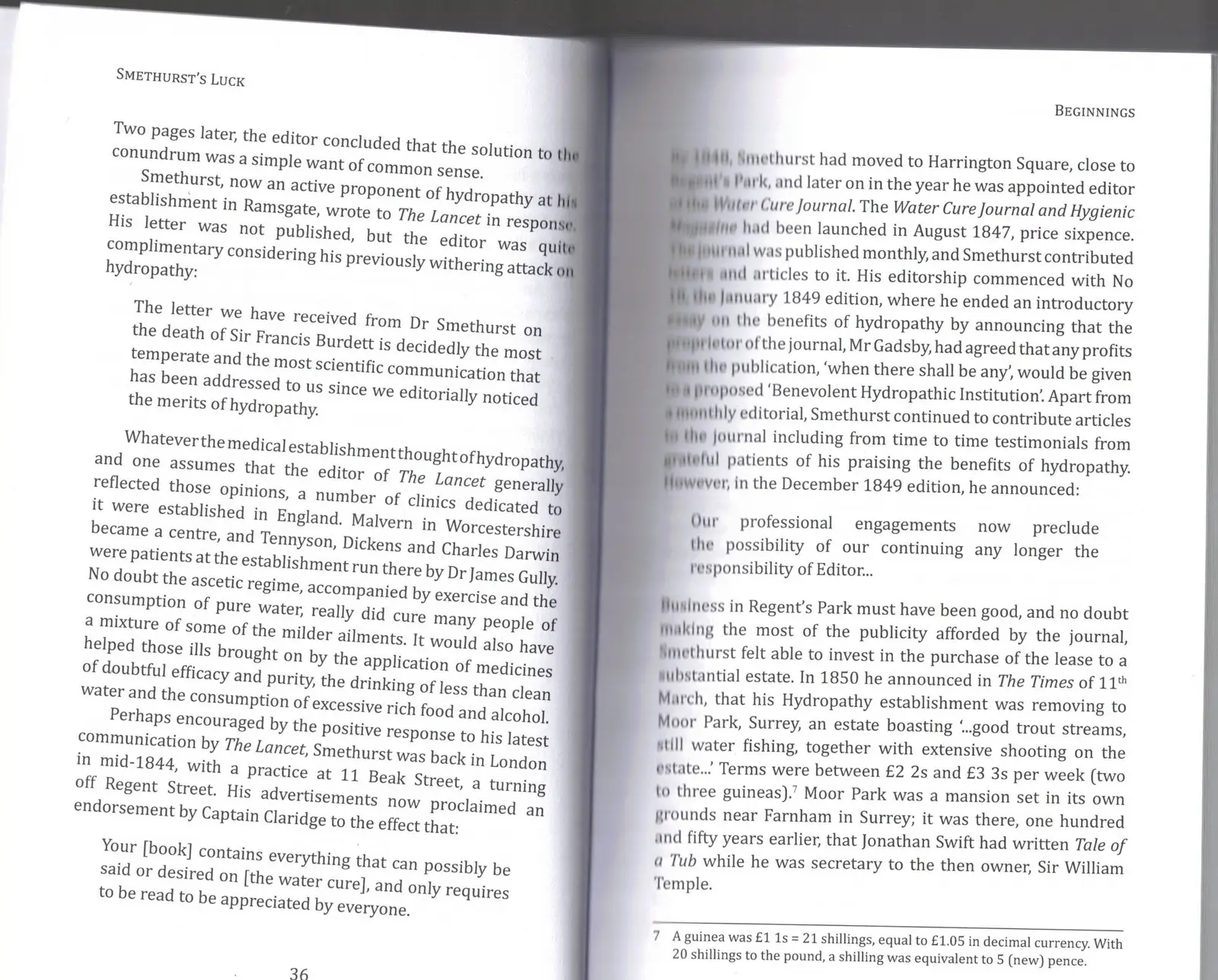
Smethurst’s Luck
The cave makes an appearance in fiction: a page from Smethurst’s Luck.
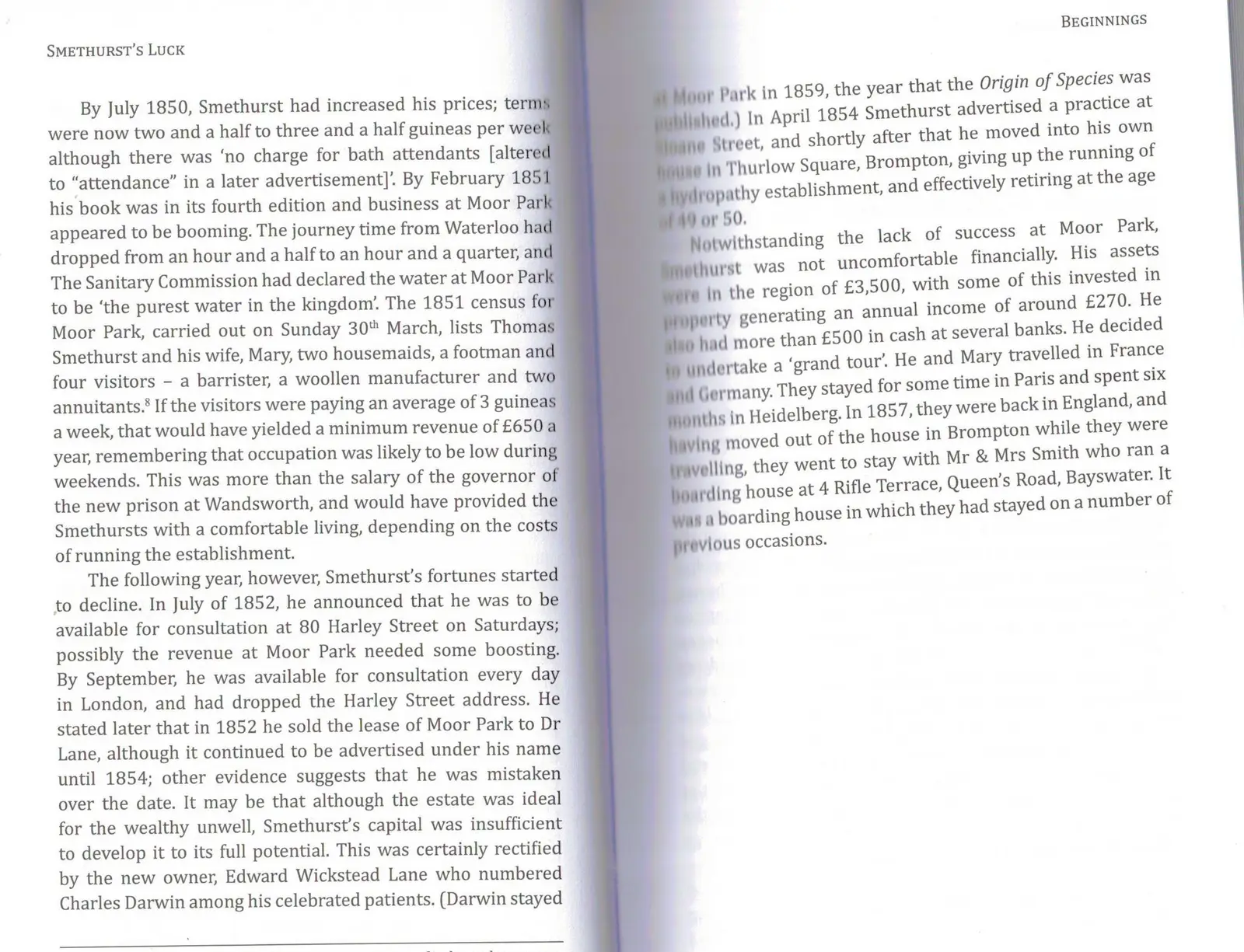
Smethurst’s Luck
The passage continued.
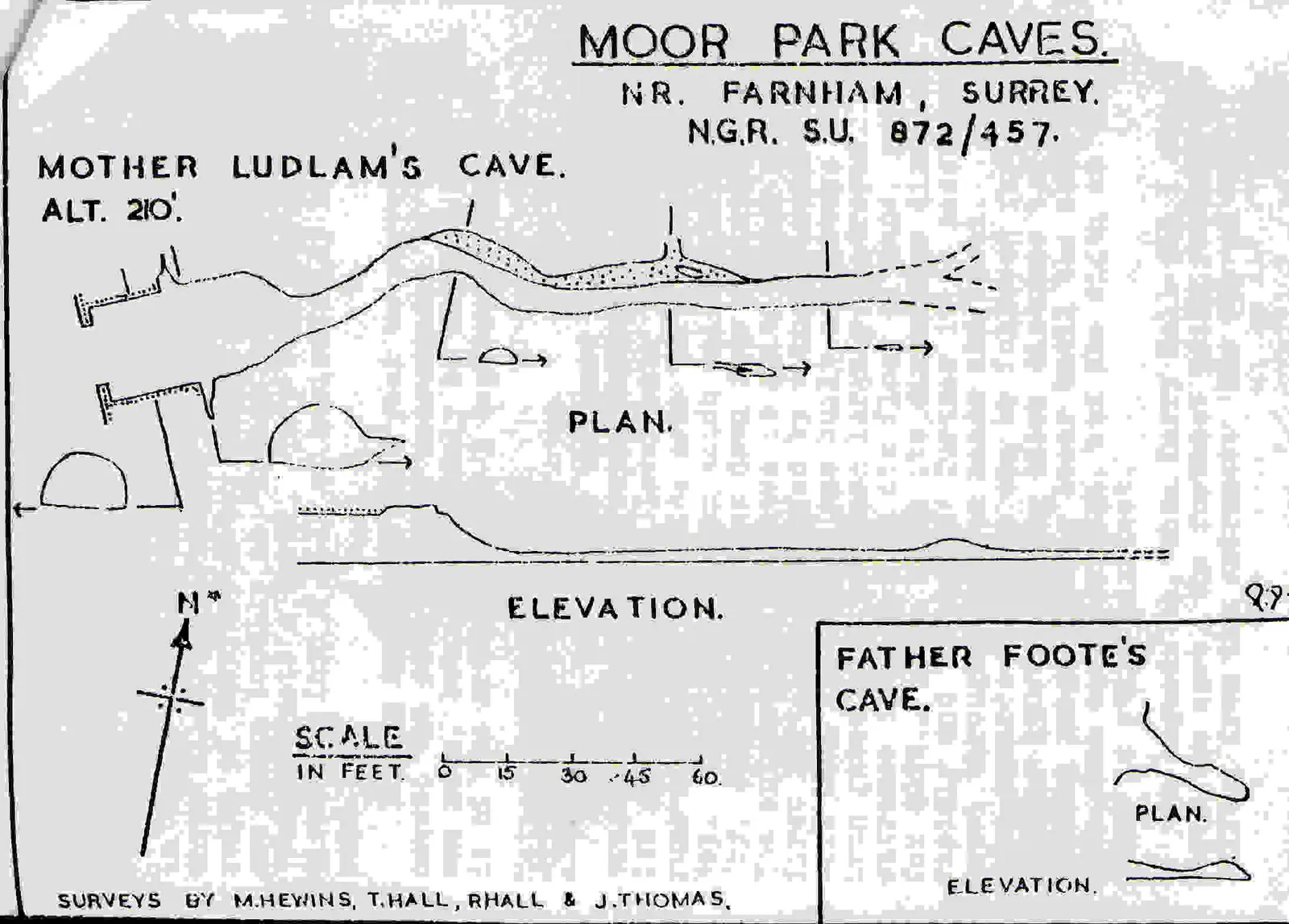
1961
The Moor Park caves photographed during the 1961 survey, shortly before the roof fall of the early 1960s.
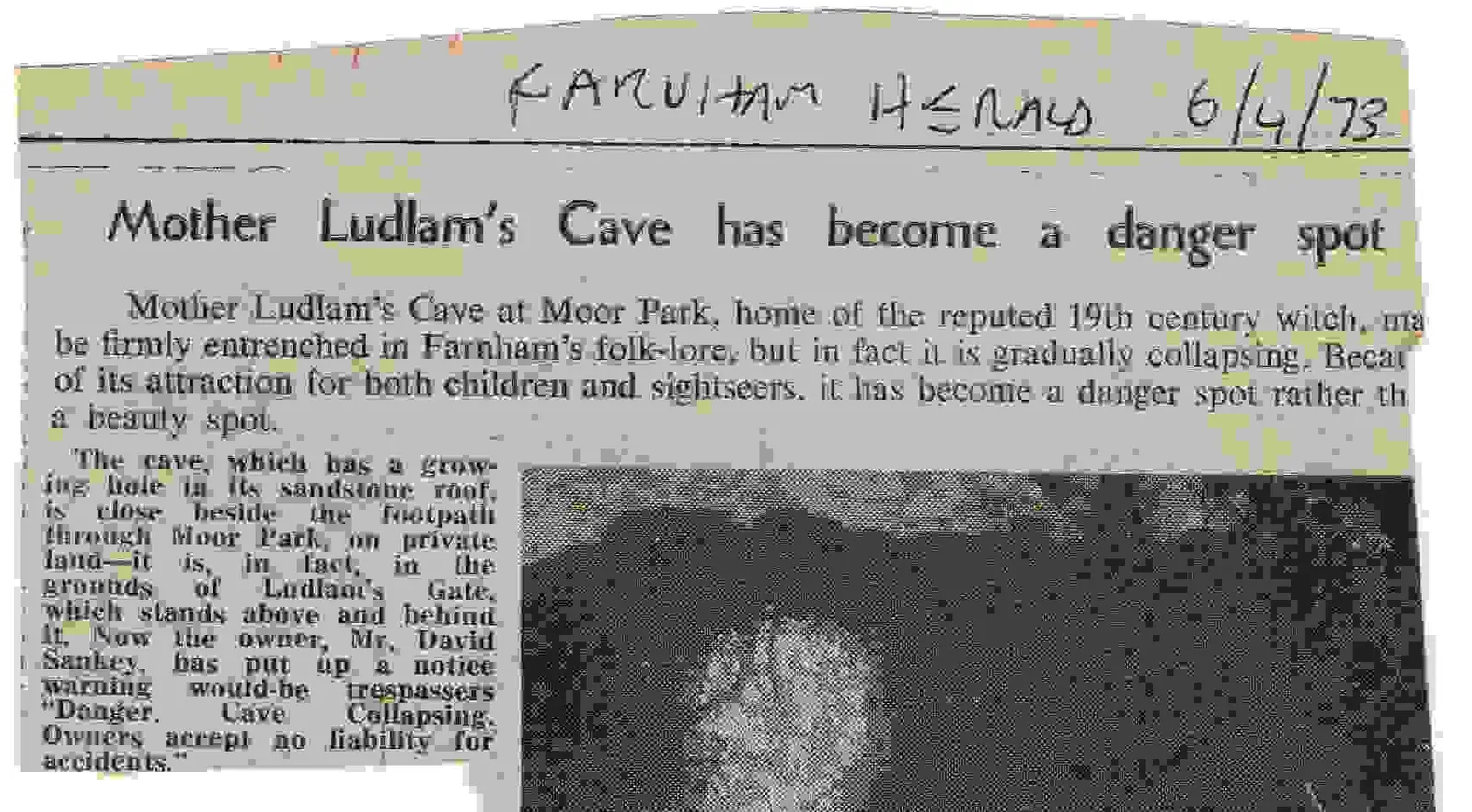
6 April 1973
The Farnham Herald reports on the cave.
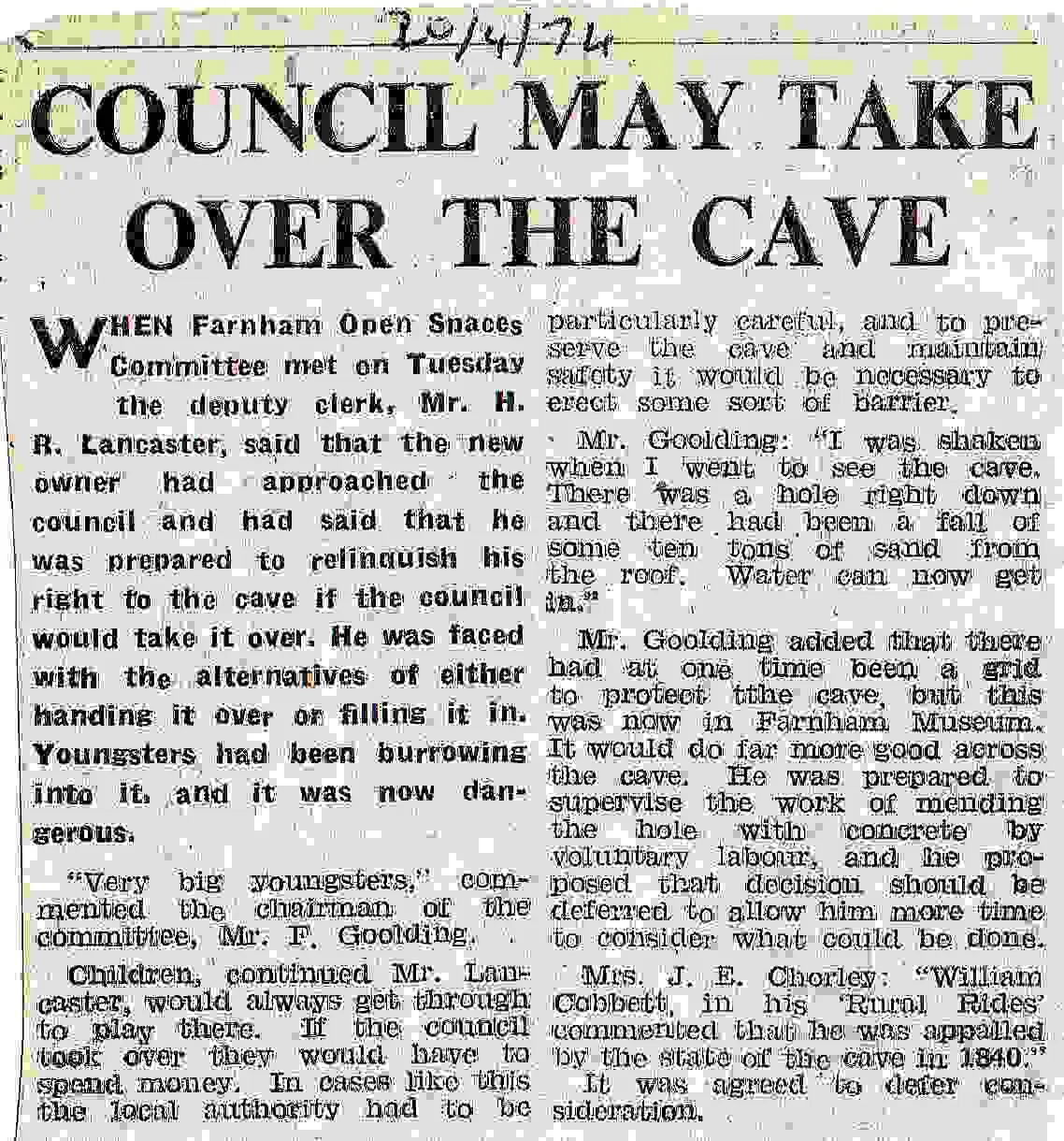
24 April 1974
The Farnham Herald returns to the story a year on.
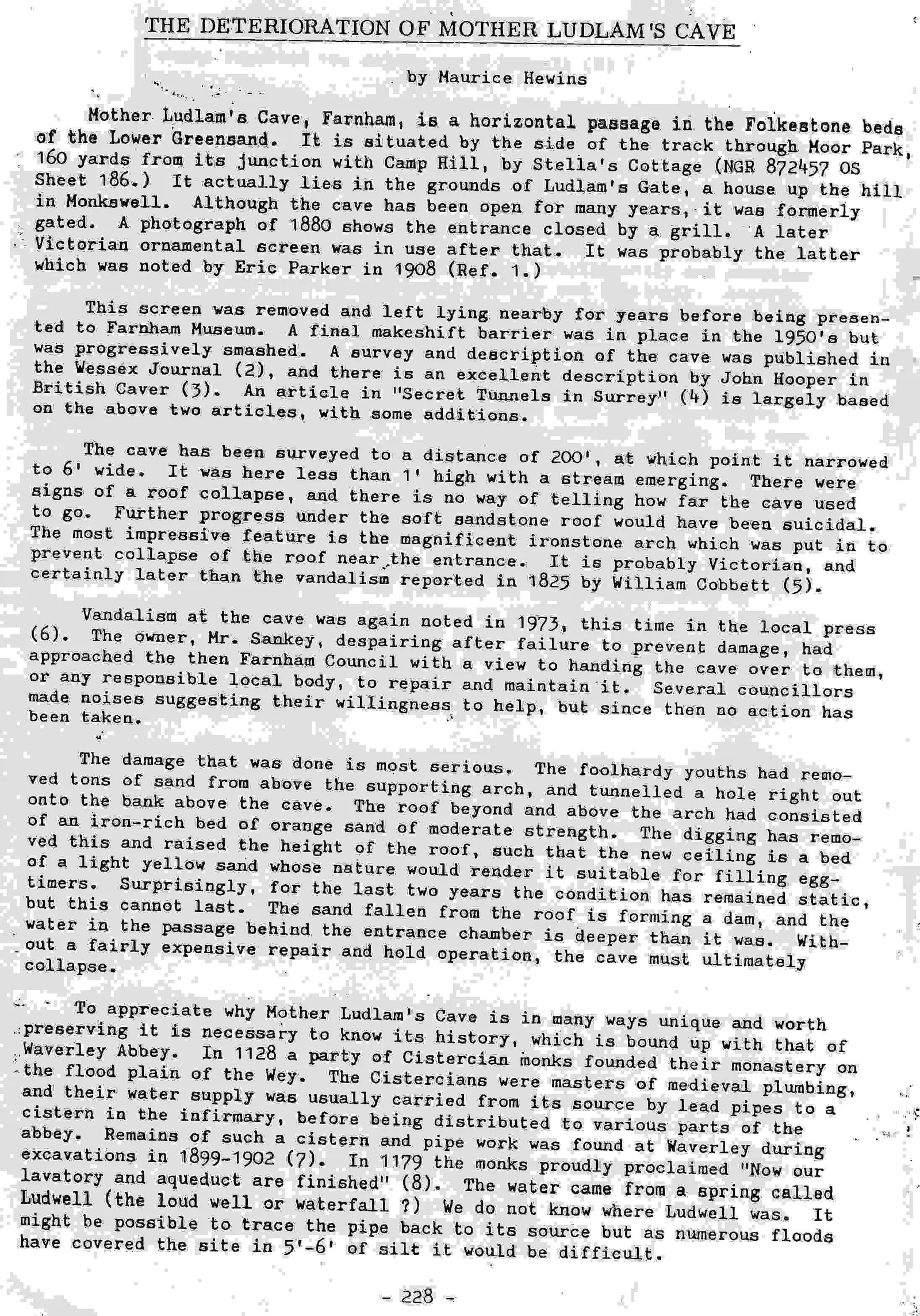
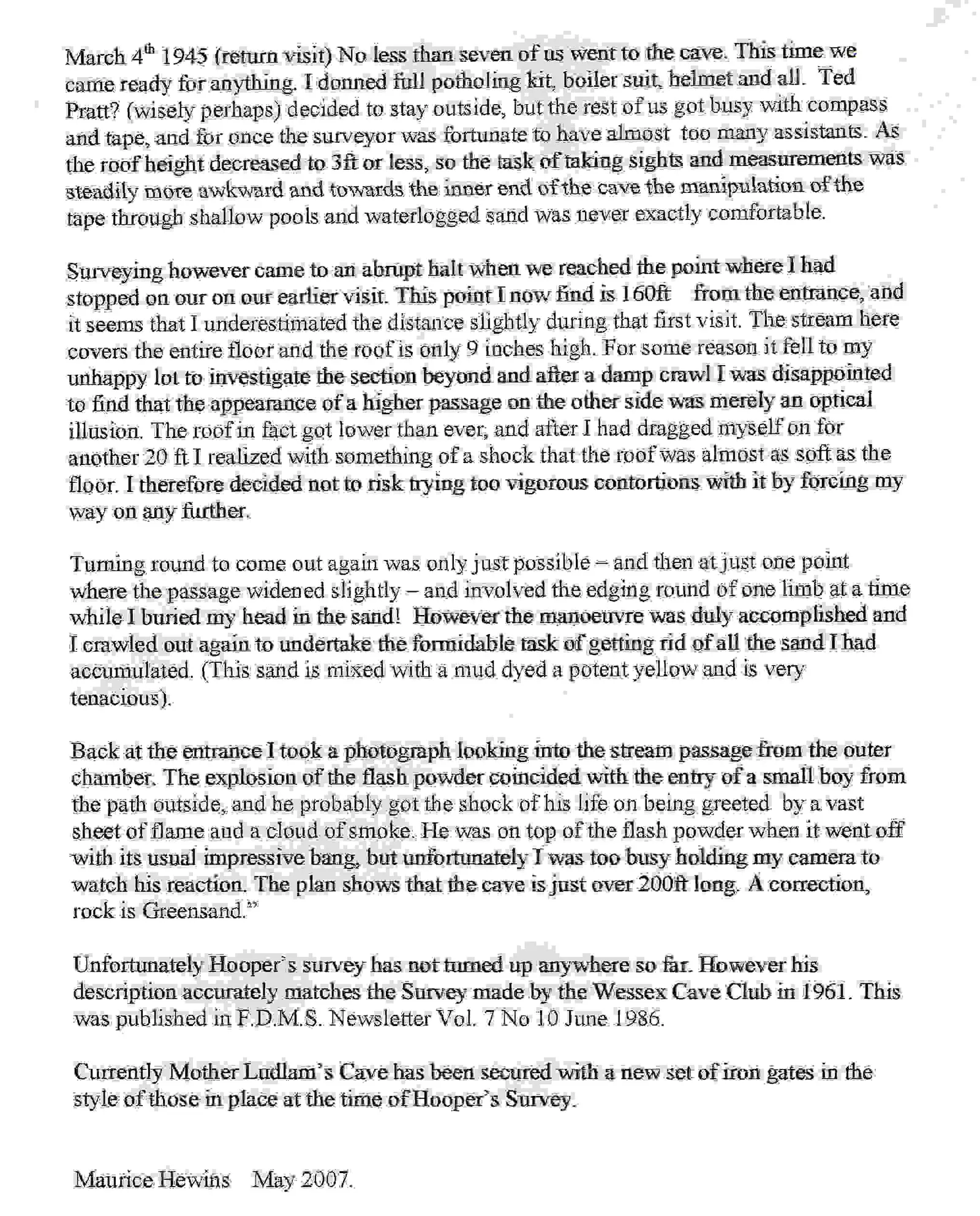
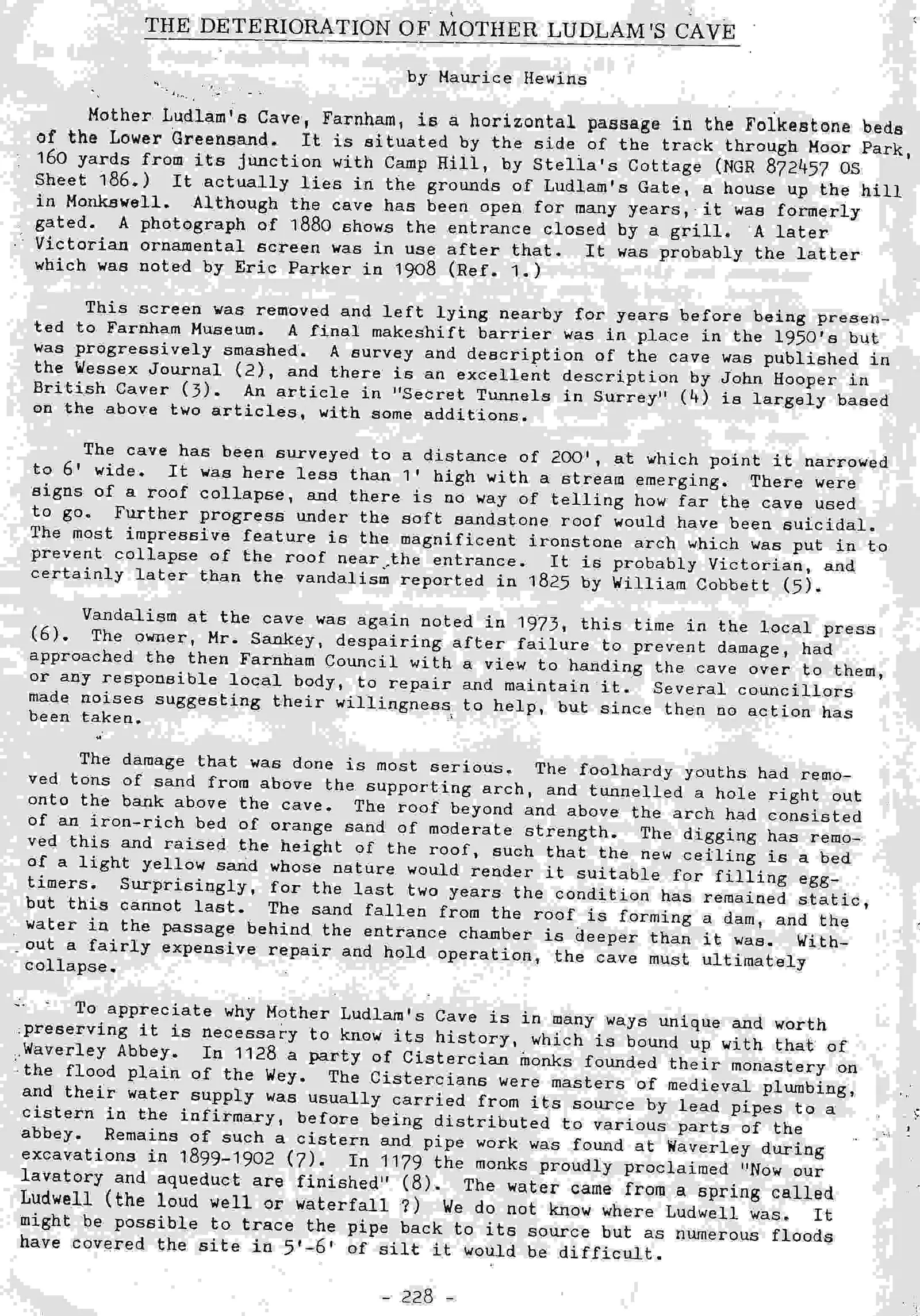
Hewins research
From the research of Maurice Hewins, historian and caver, who has documented both caves.
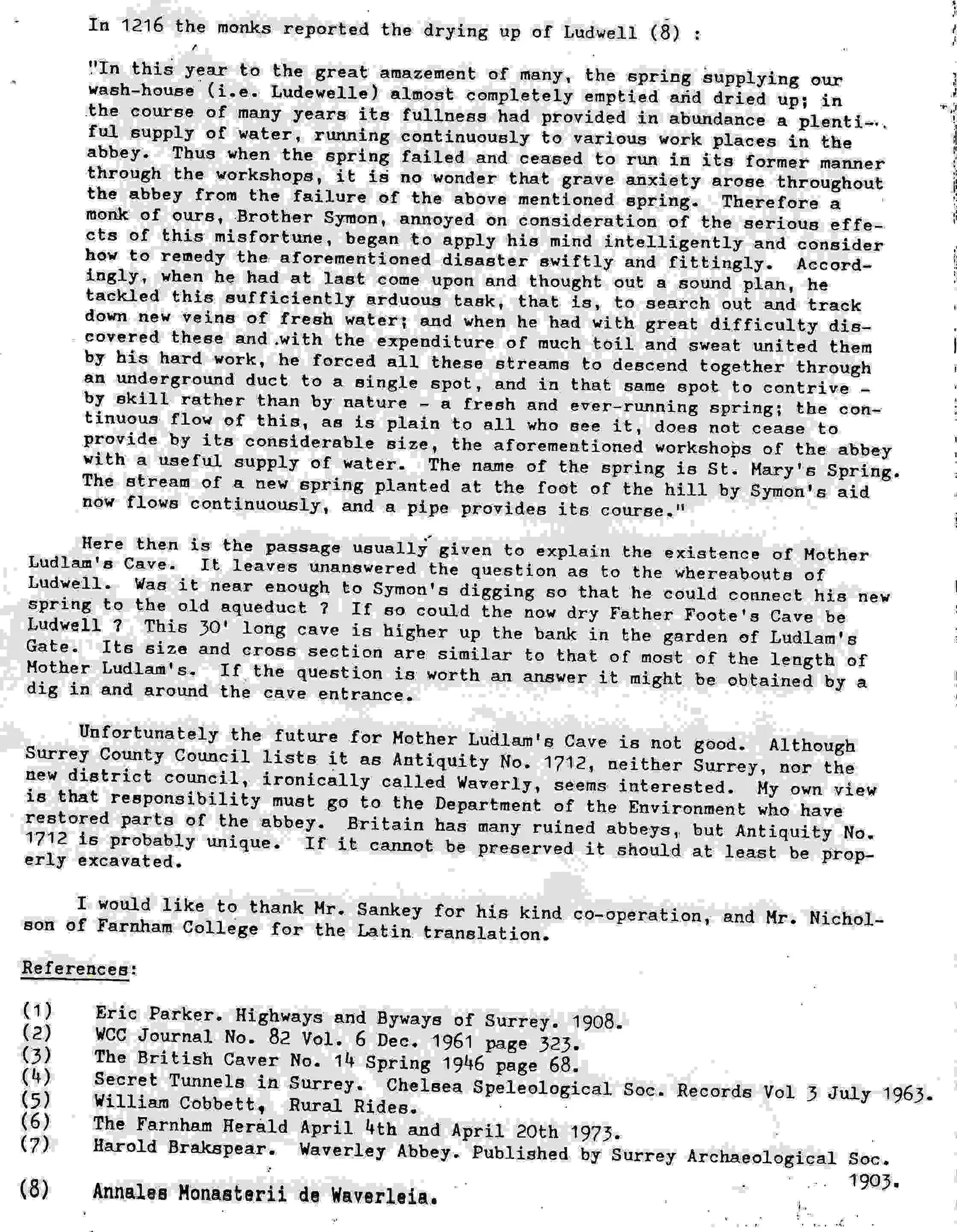
Hewins research
The research continued: measured drawings and notes.
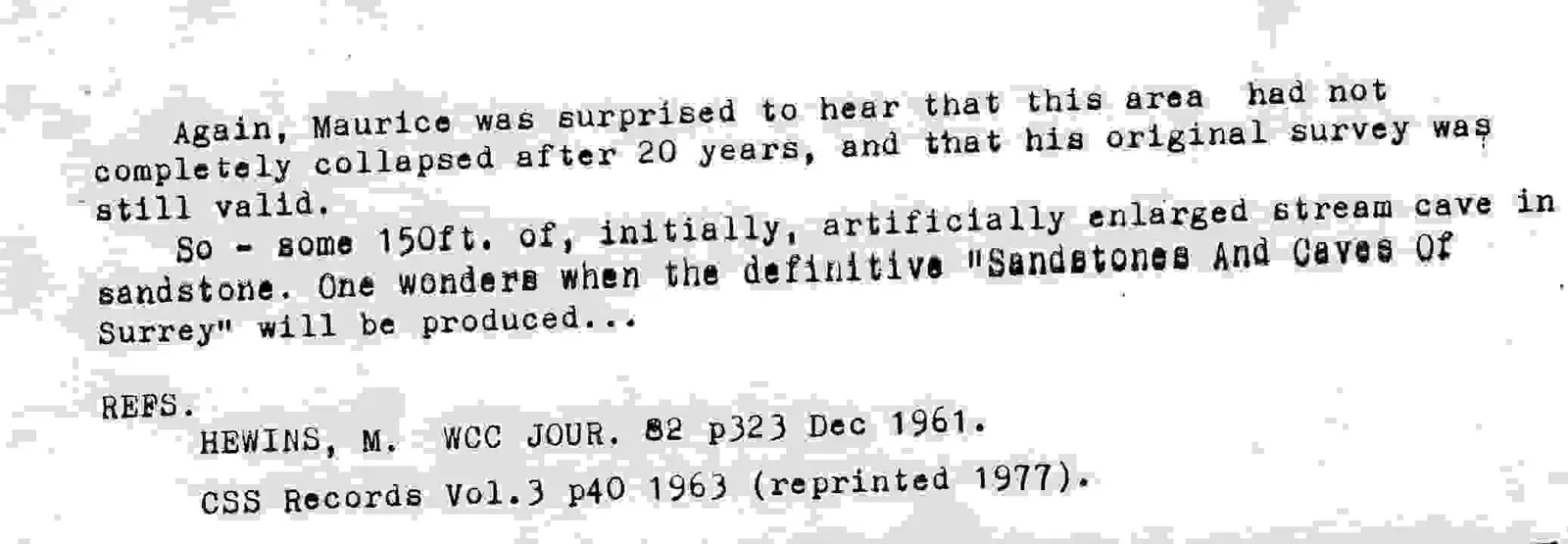
Research
A further mention of the cave in published research.
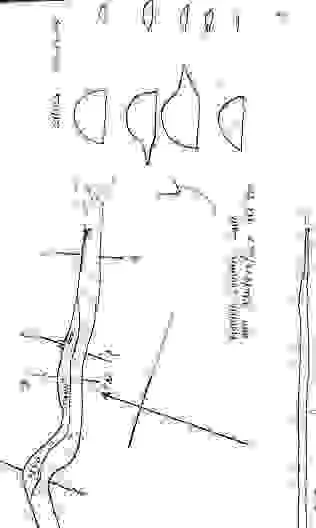
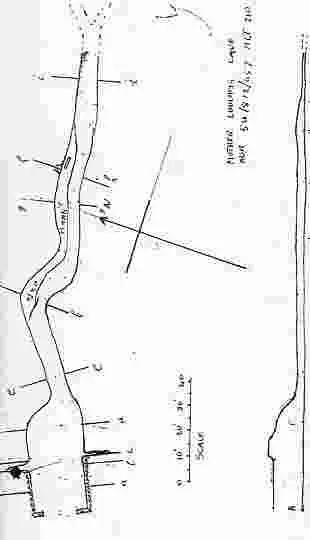
Survey
A section through the passage, from a caving survey.
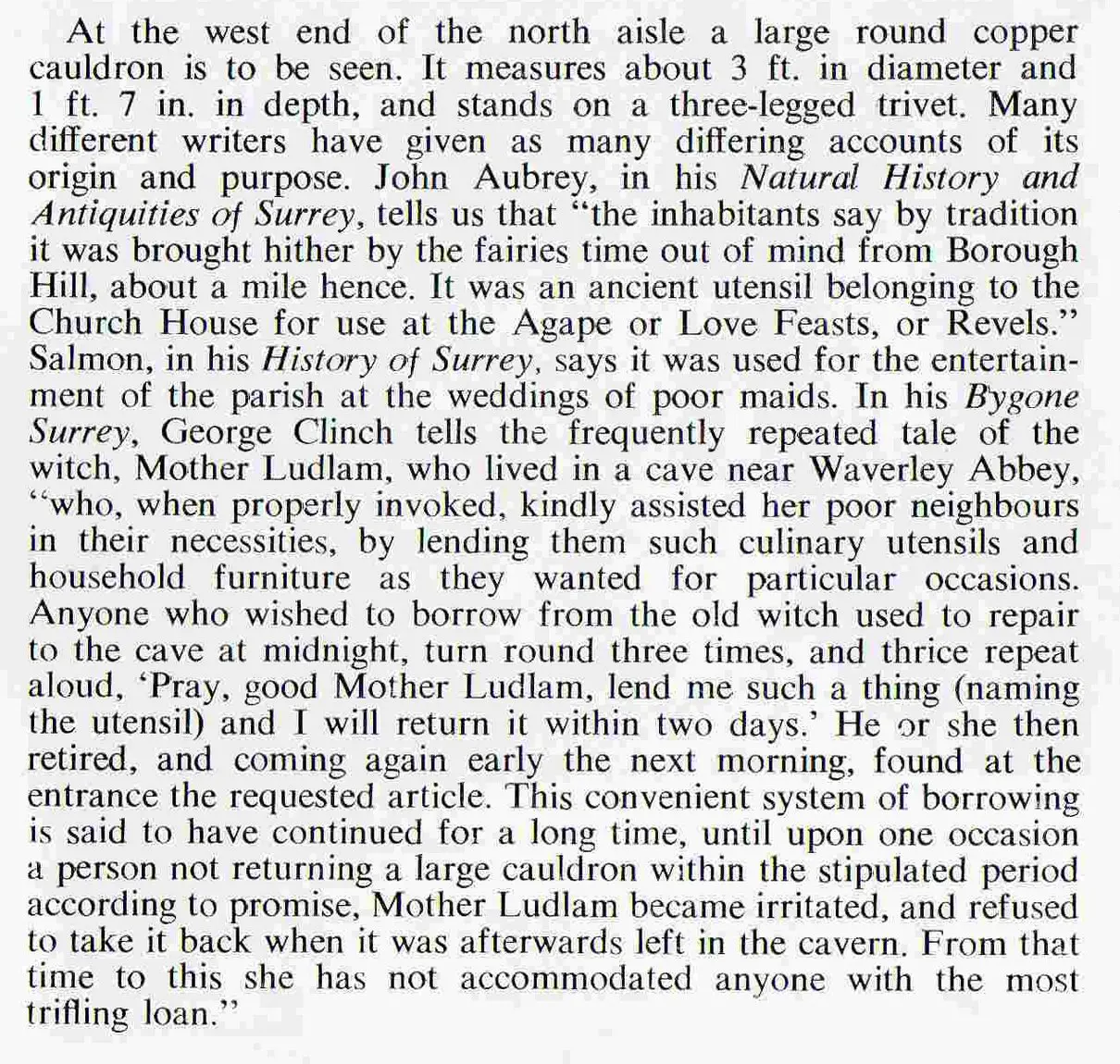
The cauldron
The Frensham cauldron as illustrated in an earlier account.
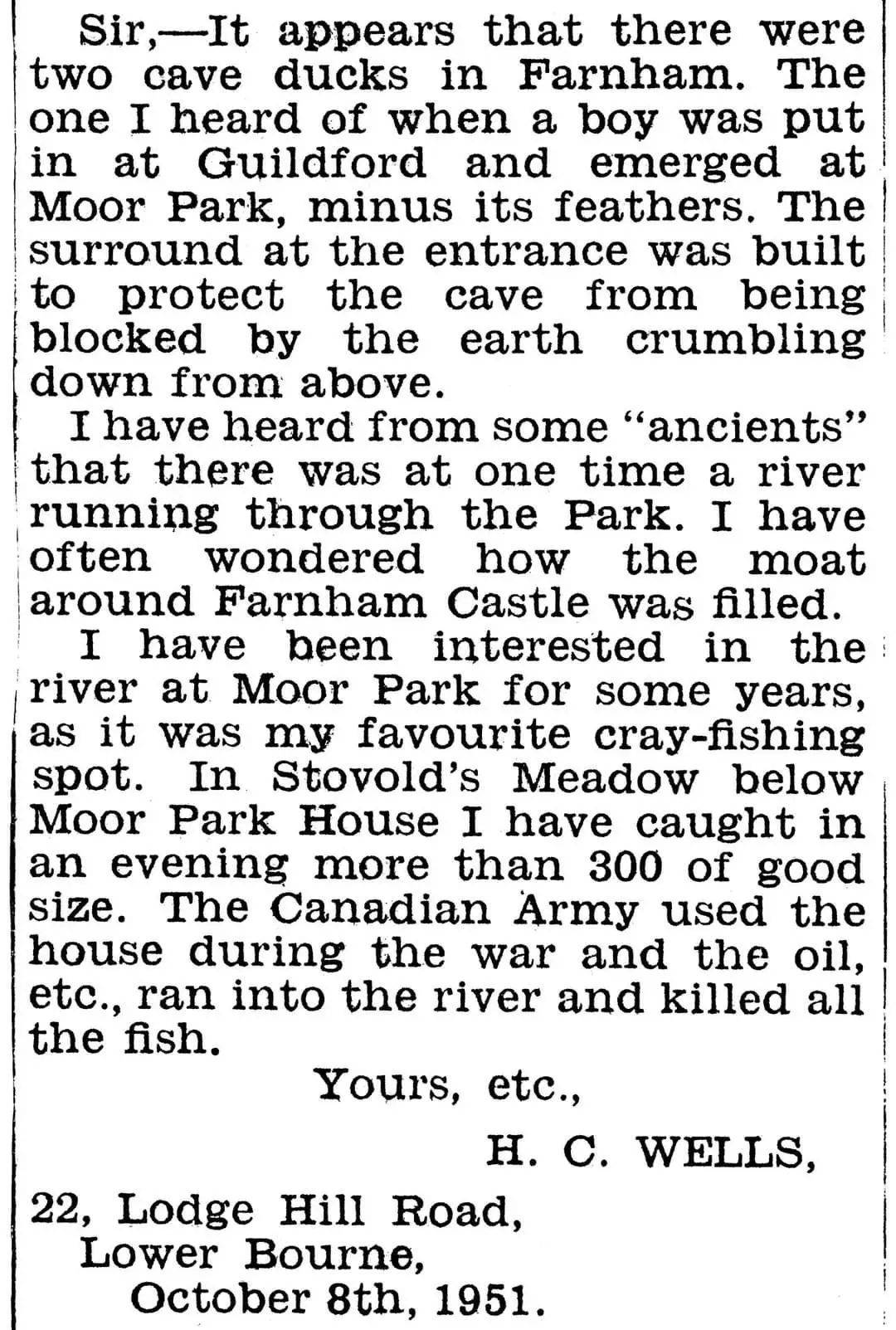
Archive
From the growing collection of shared photographs and cuttings.
Walk the history with us
Small-group guided tours share the cave’s history and folklore at an easy pace, on safe set routes.
Enquire about a tourThe cave that made this history is also available to hire as a filming location.